Traditional Karate
Weekly Newsletter • 21 March 2026
Weekly Update from Wadō-Ryū Benkyō
Hello,
Welcome to your 15th Weekly update from Wado-Ryu Benkyo, here is what you will find below:
🥋 1. Saturday Benkyo Class Review – Today's Training
This Saturday’s session followed a familiar structure, beginning with a warm-up focused on using the body correctly through targeted Wadō-Ryū movement.
This month has developed a clear theme: returning to kihon and breaking techniques down to ensure that each detail is as refined as it can be. Rather than moving quickly through combinations, the emphasis has been on slowing things down, encouraging both self-analysis and group observation.
As is often the case in these sessions, individuals demonstrated techniques in front of the class, with others offering feedback and observations, followed by small but important corrections from Sensei. This process continues to highlight how much can be gained from careful, shared study.
A common theme emerged around Notsukomi techniques. It became clear that several of us were making the same mistake — not allowing the body to return to a natural, neutral position before moving into the next technique.
Using Junzuki Notsukomi as an example, we are often reminded not to “come up” or to “stay low”. However, this does not mean holding the body forward or restricting movement. Doing so can choke the technique and limit the body’s ability to move freely.
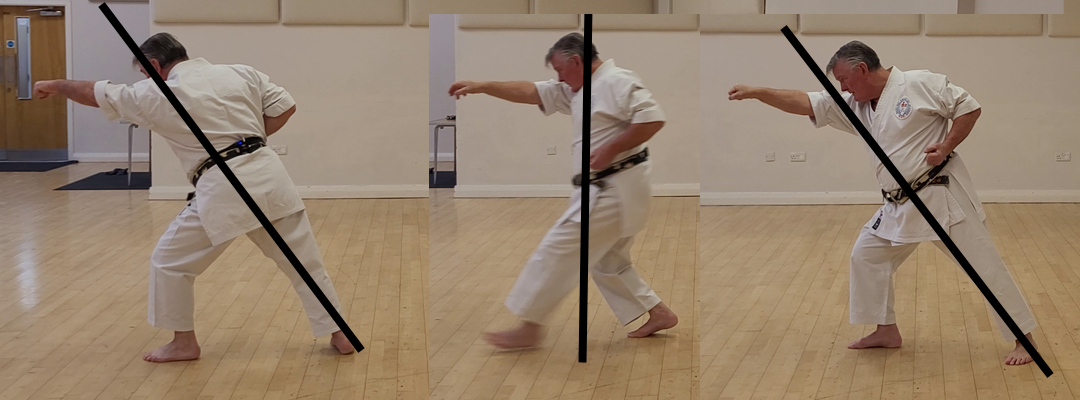
It is easy, particularly in kihon line work, to anticipate the next technique. In reality, the body should be able to move into any technique at any time. To reinforce this, we practised combinations where one technique led unpredictably into another — for example: Ayumi Ashi Junzuki, Gyakuzuki, Junzuki, Nagashi Zuki, along with several variations.
This kept the mind active, but more importantly required the body to remain free, adaptable, and correctly structured throughout. The focus was on maintaining posture while allowing natural transition between techniques.
We also spent time examining how and when different parts of the body move — and when they should remain relaxed. Particular attention was given to the sinking of the front knee in Junzuki, drawing the back hip and foot into action. Although this may seem simple, it is something that requires regular practice if the whole body is to work together effectively.
This also reinforces an important point: although we often translate Kihon as “basics”, a more accurate meaning is foundation. It underpins everything we do.
The second half of the session moved on to Chintō Kata.
After several run-throughs, we began to break the kata down, adding keisetsu and focusing on key details. Attention was first given to how the front foot subtly adjusts to allow the body to drop back into the initial Tate Seishan Dachi, and how the body settles — shizumu — into position.
Building on the kihon work from earlier, we examined the sonoba de ippon tori and gyakuzuki sequence leading into the second Tate Seishan stance. Remaining with the theme of sonoba de, we also explored how it applies to the jūji jōdan uke, allowing us to maintain position while improving the speed and clarity of transition.
The difference in sharpness and efficiency when applying kihon principles to kata was clear.
We then worked in pairs, exploring jujutsu-based applications from the opening sequence. This highlighted the role of the body in generating power and controlling the opponent, rather than relying on the arms alone.
To finish, we revisited the traditional maegeri ippon kumite, focusing on taking the body off the line of attack in the same way as the opening movement of Chintō. From this, the uke added a tobikomi zuki after the kick, bringing the hands into play and extending the exchange.
It is often the case that kata can lose context when practised in isolation. However, when explored with a partner, the movements take on a different meaning and purpose. This was very evident in this session.
We concluded by performing Chintō once more, integrating everything we had worked on. The difference in movement, understanding, and overall quality was noticeable across the group.
As always, a thought-provoking and challenging session — one that reinforces the importance of returning to fundamentals and continuing to move forward.
Saturday sessions to run through 2026 - we will be training all Saturdays in March and April except the 18th April, if you would like to attend a Saturday session for the first time reply to this email and let us know
🎥 2. This Weeks Long-Format Video
Part 23 - Kette Gyakuzuki Notsukomi - Kihon Fundamentals
Kihon Fundamentals – Kette Gyakuzuki Notsukomi
In this latest Kihon Fundamentals video, Roger Vickerman Renshi explores the relationship between Maegeri and Gyakuzuki Notsukomi, showing how each technique must be allowed to complete its own action rather than being constrained by the previous movement. The breakdown highlights posture, hip movement, relaxation, and common mistakes that can limit both power and fluidity.
Follow the link to watch the full technical breakdown.
📝 3. Featured Article of the Week
Article: Read the full article on the website
Ippon Kumite No.1 – Ippon Me
This first Ippon Kumite reveals how Wadō-Ryū partner work grows directly out of Kihon Kata. What appears to be a simple sequence actually contains key lessons in off-line movement, posture, centre control, and balance disruption. In the video and article, Roger Vickerman Renshi explores the technique step by step, including what uke should be feeling as the structure begins to collapse.
Follow the link for the full article and detailed breakdown.
📅 4. Upcoming Courses, Events, or Updates
Things you may want to know about:
- Course and events calendar is now live on the website and will be updated regularly so please bookmark it and check it
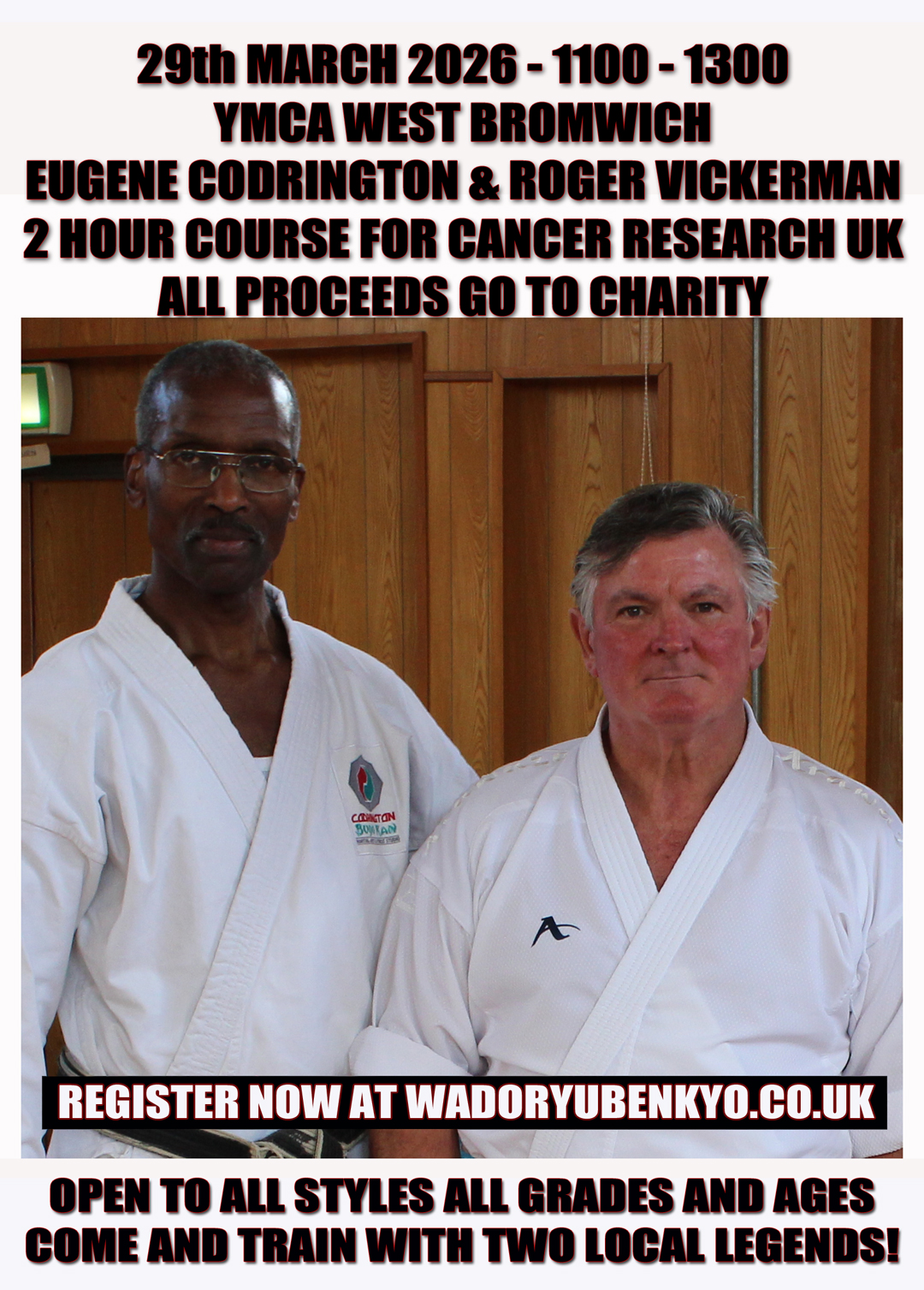
- 29th March 2026 Joint Charity Course with Eugene Codrington full details here only one week left to book on!
- The May 2026 course dates and location has been confirmed, you can see all the details and book on here
- Website updates: Wadō-Ryū Benkyō is now fully live, but more content is being added all the time, so keep checking back for new articles, videos and announcements
- Saturday sessions to run through until 2026 - we will be training all Saturdays in December and January except the 17th January, if you would like to attend a Saturday session for the first time reply to this email and let us know
🧠 5. Wado Ryu Principle of the Week
Sen-no-sen (先の先) — Initiative Within the Attack
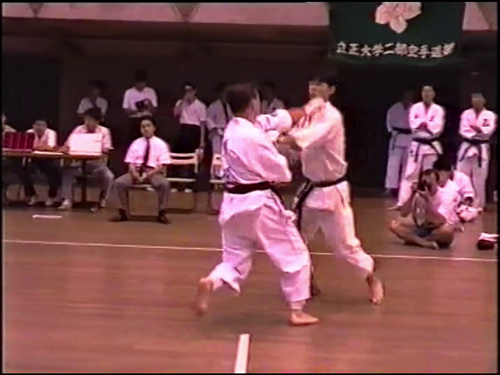
Sen-no-sen (先の先) is often translated as “initiative within the initiative.” It describes responding at the exact moment the opponent begins their attack — neither before nor after, but simultaneously.
In Wadō-Ryū Karate, Sen-no-sen represents a refined understanding of timing. Rather than waiting for the attack to fully develop, the practitioner recognises the moment of intention and enters immediately, intercepting the opponent’s movement before it can become effective.
This does not mean simply striking first. Instead, it means recognising the opponent’s commitment at its earliest stage and moving at precisely the same moment.
Understanding the Meaning of Sen-no-sen
The phrase consists of three elements:
- Sen (先) — initiative or precedence
- No (の) — possessive connector
- Sen (先) — initiative again
Together they describe taking initiative within the opponent’s initiative.
The opponent begins to attack, but the defender enters at the same instant, preventing the attack from developing fully.
Timing at the Moment of Commitment
Sen-no-sen requires the ability to perceive intention as it becomes action. The moment an opponent begins to move, their body must shift weight, adjust posture, or extend a limb. These small changes reveal the attack before it is completed.
The practitioner moves at this instant, often appearing to strike “first,” even though the opponent initiated the action.
This principle highlights an important distinction:
Speed attempts to outrun the opponent.
Timing allows you to intercept the opponent’s movement at the moment it begins.
Sen-no-sen therefore depends less on quickness and more on perception and calm awareness.
Sen-no-sen in Wadō Movement
Several key elements of Wadō movement help express this principle.
Irimi (Entering)
Entering movement often accompanies Sen-no-sen. As the opponent begins their attack, the practitioner moves forward or diagonally into a superior position, disrupting the attack before it can reach full extension.
Taisabaki (Body Evasion)
Rather than colliding with the attack, the body shifts slightly off the line while simultaneously delivering technique. This allows the practitioner to control distance and positioning while intercepting the opponent’s movement.
Control of Distance (Ma-ai)
Correct distance makes Sen-no-sen possible. If distance is poorly judged, the practitioner either moves too early or too late. When distance is correct, the moment of interception becomes clear.
Examples in Wadō Training
Sen-no-sen appears frequently in Wadō practice.
In Kihon Kumite, the defender often enters at the exact moment the attack begins. This simultaneous movement prevents the attacker from gaining momentum.
In kata, many techniques represent entering while the opponent begins to strike. The practitioner appears to move first, but the movement actually coincides with the opponent’s attack.
In kumite, Sen-no-sen becomes especially visible when an experienced practitioner intercepts an attack before it fully develops.
Sen-no-sen and the Mind
Executing Sen-no-sen requires a calm and attentive mental state.
If the mind becomes impatient, the practitioner may move too early and expose themselves.
If the mind hesitates, the opportunity disappears.
The ideal state allows perception without tension — often described in Wadō through concepts such as Mushin and Fudōshin.
Sen-no-sen Compared with Go-no-sen
Wadō strategy often describes three major timing concepts:
- Go-no-sen — responding after the opponent’s attack begins
- Sen-no-sen — entering at the exact moment the attack begins
- Sen-sen-no-sen — anticipating and acting before the attack begins
Among these, Sen-no-sen represents the balance point between patience and initiative.
In Simple Terms
Sen-no-sen means entering at the precise moment an opponent begins their attack.
Rather than waiting for the attack to develop or attempting to strike prematurely, the practitioner moves at exactly the same instant. Through timing, positioning, and awareness, the opponent’s attack is neutralised before it can become effective.
🙏 Thank You for Being Part of the Community
If you have any questions, video requests, or feedback, contact us here — We read everything.
Wishing you a fantastic week of training,
Roger and The Team
Wado-Ryu Benkyo